Table of Contents
Our Services
Connect With Us
Diagnostic kits are not regulated like generic medical devices. A rapid test, an ELISA kit and a set of calibrators each carry different risk, evidence and licensing implications. This guide explains how IVD registration in India actually works today, what “notified” and “non-notified” mean now, and what manufacturers and importers should prepare.
Quick Answer
In India, registering an in vitro diagnostic (IVD) kit requires complying with the Medical Devices Rules, 2017 (MDR 2017) through CDSCO. Risk class (A–D), notified vs. non-notified status, and whether you manufacture domestically or import determine your licensing and performance-evaluation pathway.
- Notified vs non-notified: a legacy split (HIV, HBV, HCV kits and blood grouping sera were “notified”); today every IVD is licensed by risk class.
- Classes: A, B, C, D under Part II of the First Schedule.
- Who licenses: State authority for Class A/B manufacture; CDSCO for Class C/D manufacture and all imports.
- Evidence: test licence and clinical performance evaluation apply to new IVDs; confirm with CDSCO.
How IVD Kit Registration in India Works Under MDR 2017
CDSCO confirms that all IVD kits and reagents are regulated under the Medical Devices Rules, 2017, framed under the Drugs and Cosmetics Act, 1940. Licences are risk-based and issued through the CDSCO medical device portal.
| Risk class | Licensing regime began |
|---|---|
| Class A and B (low, low-moderate) | 1 October 2022 |
| Class C and D (moderate-high, high) | 1 October 2023 |
Notified vs. Non-Notified Diagnostic Kits: What Diagnostics Teams Must Know
“Notified” and “non-notified” describe the pre-MDR framework; they no longer decide your licence by themselves. Many older articles still describe the old process, so check the date of any source you rely on.
Notified IVD Kits vs. Previously Non-Notified Diagnostic Kits
| Point | Notified (legacy) | Non-notified (legacy) |
|---|---|---|
| Examples | HIV, HBV, HCV kits; blood grouping sera | All other IVD kits and reagents |
| Old import route | Registration Certificate (Form 41) + Import Licence (Form 10) | Import Licence (Form 10) only |
| Today | Licensed by Class A–D under MDR 2017. Treat legacy forms as history and apply through the current portal. | |
How S.O. 648(E) Changed “Non-Notified” IVD Compliance in India
The 2020 Health Ministry notifications brought all medical devices, including IVDs, under the drug regulatory framework in phases. Non-notified devices first went through registration and then moved to full licensing on the dates above.
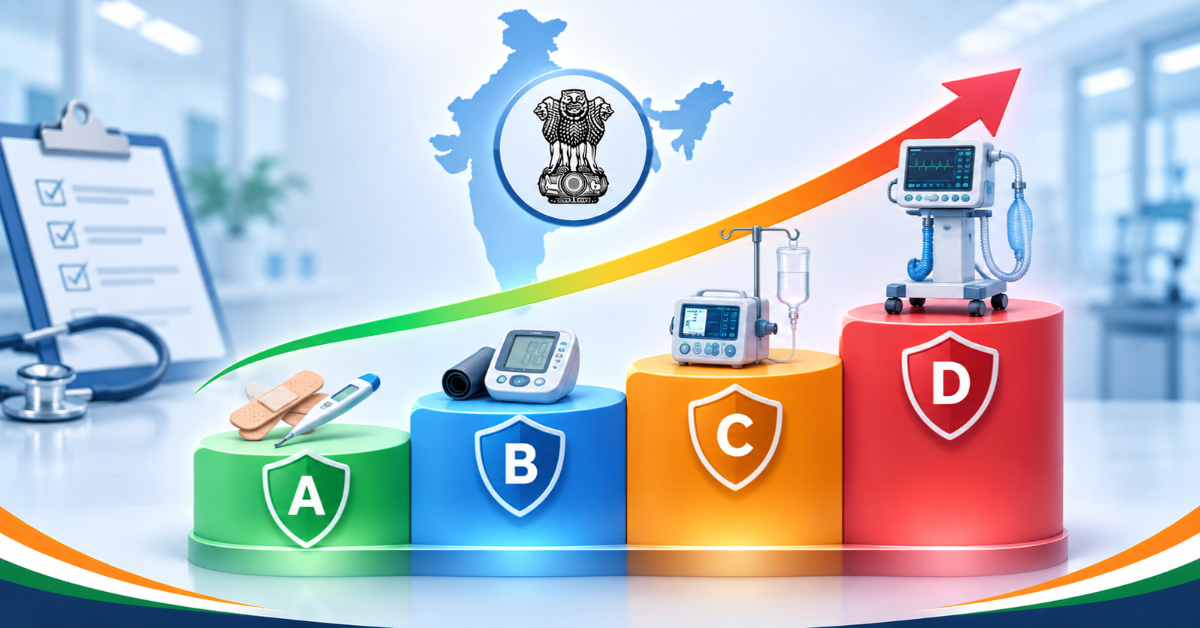
IVD Risk Classification (Class A, B, C, D) and Kit Components Explained
IVDs are classified by risk under Part II of the First Schedule of MDR 2017. Always check your kit against CDSCO’s published IVD classification list instead of assuming a class.
A
Low risk. Typically general lab reagents, buffers and specimen containers.
B
Low-moderate risk. Many self-contained lab assays.
C
Moderate-high risk. Often infectious-disease and oncology-related diagnostics.
D
High risk. Typically blood-screening type tests.
Illustrative only; classification depends on intended use, not product type.
Reagents, Calibrators, Controls & Multi-Component Kits
CDSCO describes IVDs as including kits, reagents, instruments, analyzers and software. A multi-component kit is easier to defend when the component list, intended use and class are identical across your labels, IFU and dossier. Ask CDSCO early how calibrators and controls sold separately should be grouped.
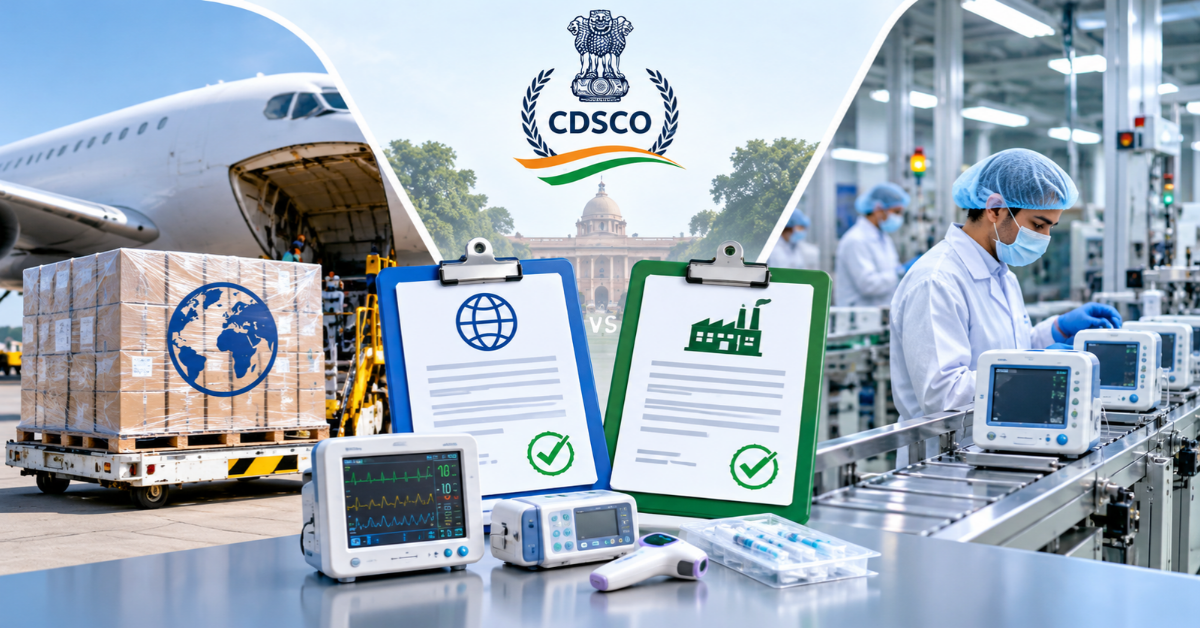
Domestic IVD Manufacturing vs. Importing Diagnostic Kits in India
Your route sets the regulator: the State handles Class A/B manufacture, while CDSCO handles Class C/D manufacture and imports of every class.
| Factor | Domestic manufacturer | Importer / overseas maker |
|---|---|---|
| Licensing authority | State (A/B); CDSCO (C/D) | CDSCO (all classes) |
| CDSCO forms listed | MD-3/MD-4 (A/B), MD-7/MD-8 (C/D) | MD-14 for import applications (verify) |
| Quality system | Fifth Schedule QMS; ISO 13485 readiness | Overseas site QMS and regulatory certificates |
| Local entity | Your own manufacturing site | Indian entity or Authorised Indian Agent to apply |
| Typical extras | Test licence (MD-12), stability data | Free Sale Certificate, shelf-life and cold-chain data |
Not sure which route fits your kit?
IVD is a core focus at TraccGlobal. Our regulatory specialists can map your kit’s class and pathway, and we are building dedicated IVD support to go with it.
Test License, Performance Evaluation & ISO 13485 for IVD Kits
A test licence lets you make or import an IVD for evaluation, and MDR 2017 provides for clinical performance evaluation of new IVDs with CDSCO approval. CDSCO publishes guidance on performance evaluation and a list of laboratories for it.
ISO 13485 is not the same thing as a licence, but it underpins the QMS your site must show. For import into India, plan for stability and cold-chain evidence for reagents, since shelf life and storage claims are scrutinised. Related reading: CDSCO medical device registration in India and the CDSCO import licence guide.
Step-by-Step CDSCO IVD Registration Process via SUGAM & Authorised Indian Agent
The sequence is: classify, assemble evidence, secure a local applicant, file online, answer queries. CDSCO’s current guidance refers to the cdscomdonline and NSWS portals; confirm whether SUGAM is still the right entry point.
- Classify your kit using CDSCO’s IVD classification list and your intended use.
- Choose your route: State or CDSCO manufacture, or import.
- Build the dossier: intended use, specimen types, component list, labels, IFU, stability and QMS evidence.
- Get a test licence if you need samples for evaluation.
- Complete performance evaluation where it applies to your device.
- File online with the correct form and fee as per MDR 2017.
- Respond to queries and inspection, then maintain post-licence compliance.
*Other than non-sterile and non-measuring. A test licence to manufacture costs ₹500 for each distinct device.
Common Mistakes That Delay IVD Kit Approvals in India
- Vague intended use or specimen claims. State blood, serum, urine, swab or saliva exactly.
- Missing shelf-life, storage or cold-chain data. Reagents need stability evidence.
- Kit components that do not match. Labels, IFU and dossier must list the same parts.
- Wrong licensing route or class. Check the classification list and the State/Central split.
- Following outdated guidance. Pre-2022 pages describe superseded processes. Also remember TB serodiagnostic kits are prohibited.
Get Dedicated IVD Regulatory Guidance From TraccGlobal
Share your kit type, intended use and target market, and we will outline the pathway with you.
Frequently Asked Questions (IVD Registration, Notified Kits & Licensing)
Is IVD registration mandatory in India?
Yes. CDSCO states that all in vitro diagnostic kits and reagents are regulated under the Medical Devices Rules, 2017. Licensing became mandatory from 1 October 2022 for Class A and B and from 1 October 2023 for Class C and D.
What is the difference between notified and non-notified IVD kits?
Under the older Drugs Rules framework, notified IVDs were HIV, HBV and HCV kits and blood grouping sera; every other diagnostic kit was non-notified. Today, all IVDs are licensed by risk class under MDR 2017, so the label matters mainly for legacy documents.
How are IVD kits classified in India?
IVDs fall into Class A (low risk), B (low-moderate), C (moderate-high) and D (high risk) under Part II of the First Schedule of MDR 2017. CDSCO publishes a classification list to check your kit.
Who licenses IVD manufacturing, the State or CDSCO?
According to CDSCO guidance, State Licensing Authorities handle manufacture of Class A and B IVDs, while the Central Licensing Authority handles Class C and D manufacture and import of all classes.
Do I need an Authorised Indian Agent to import IVD kits?
Overseas manufacturers generally need an Indian entity to apply for and hold the import licence. Confirm the current requirement on the CDSCO portal before filing.
What is a test licence for IVDs?
A test licence lets you manufacture or import limited quantities of an IVD for test, evaluation or performance studies before commercial licensing. CDSCO lists Form MD-12 for manufacturing test licences.
When is clinical performance evaluation required?
MDR 2017 provides for clinical performance evaluation of new in vitro diagnostic medical devices, with approval from the Central Licensing Authority. Whether your kit counts as new should be confirmed with CDSCO.
Are any diagnostic kits prohibited in India?
Yes. CDSCO FAQs state that serodiagnostic test kits for tuberculosis are prohibited for import, manufacture, sale, distribution and use.