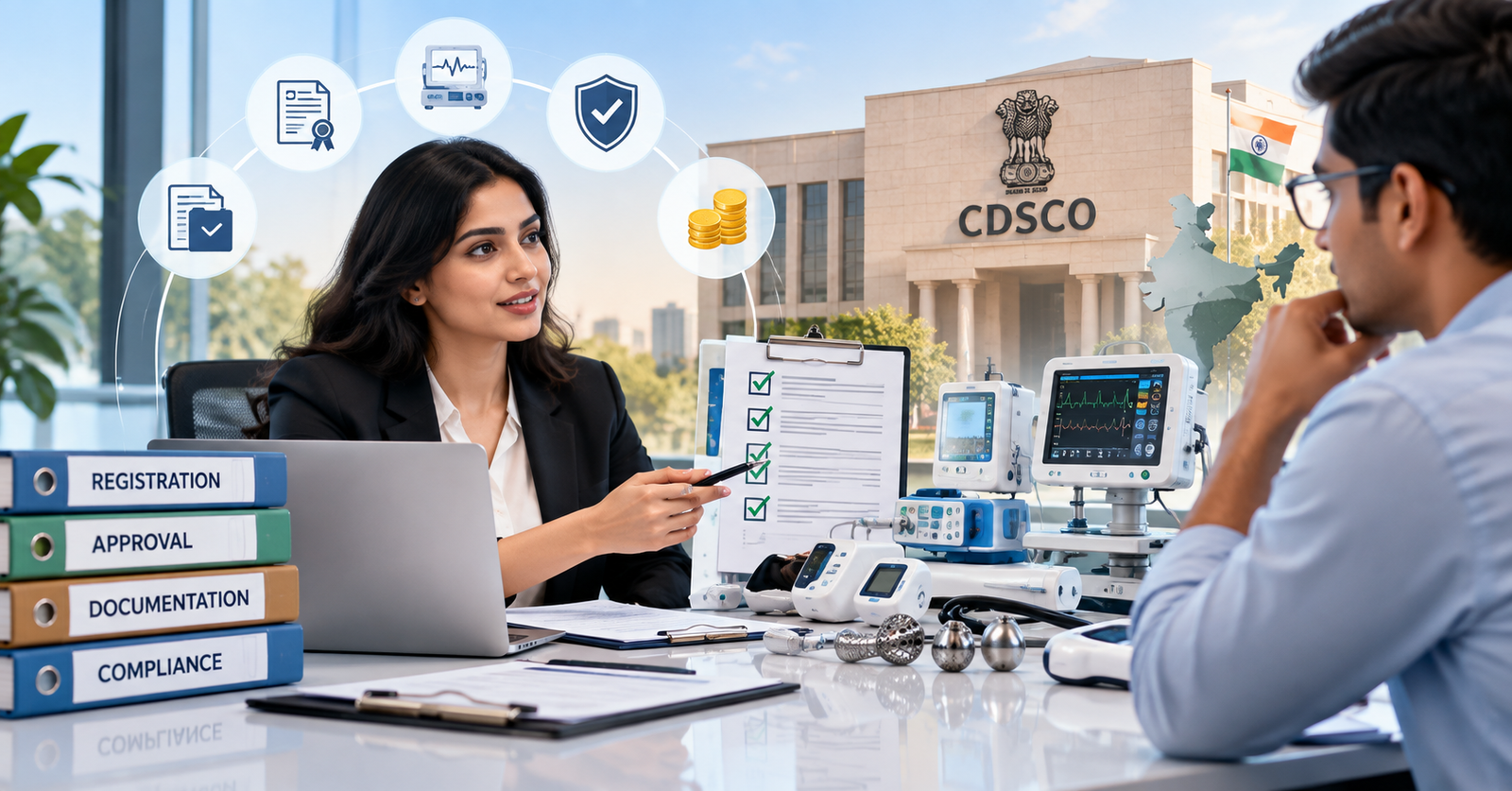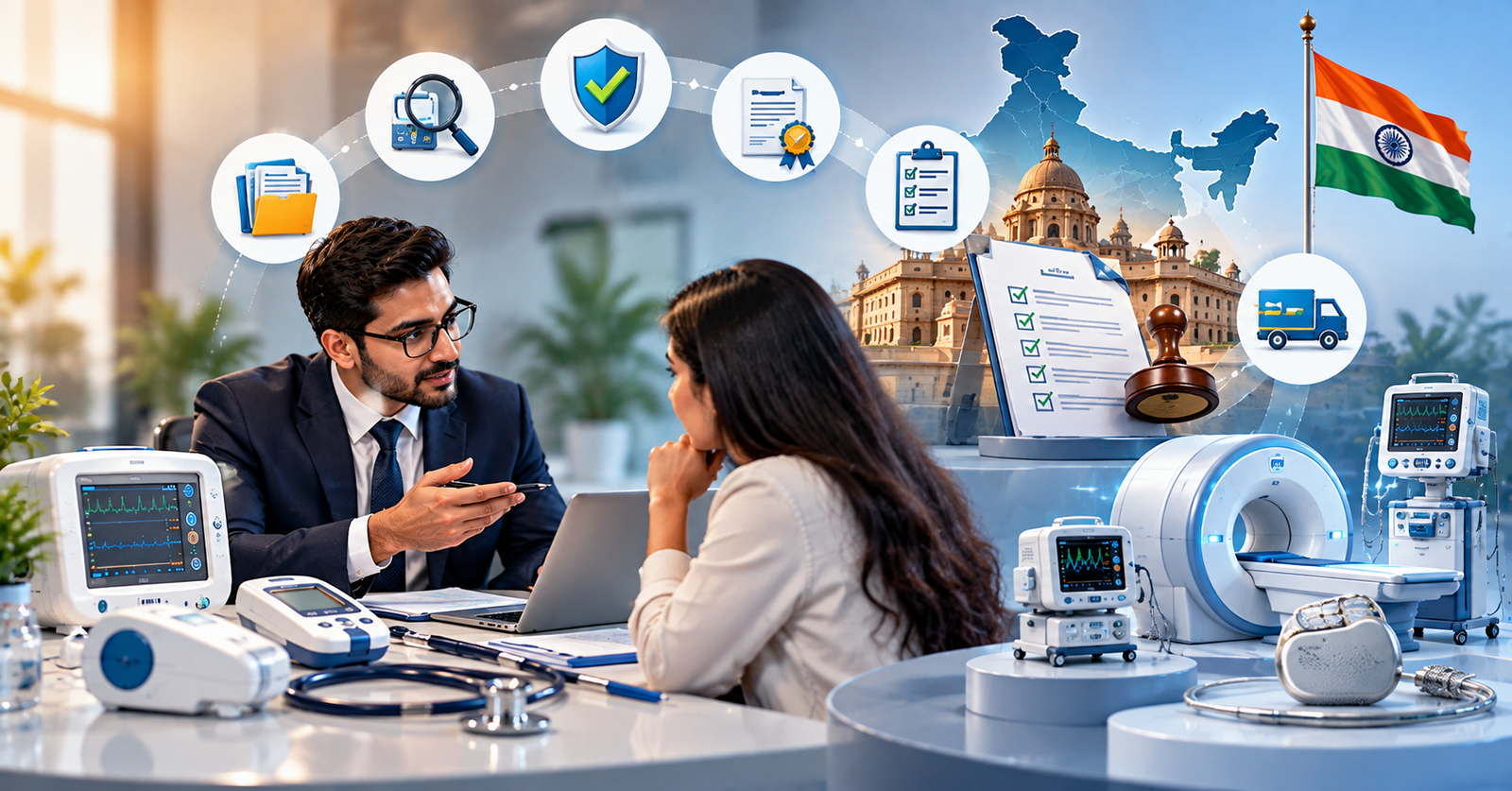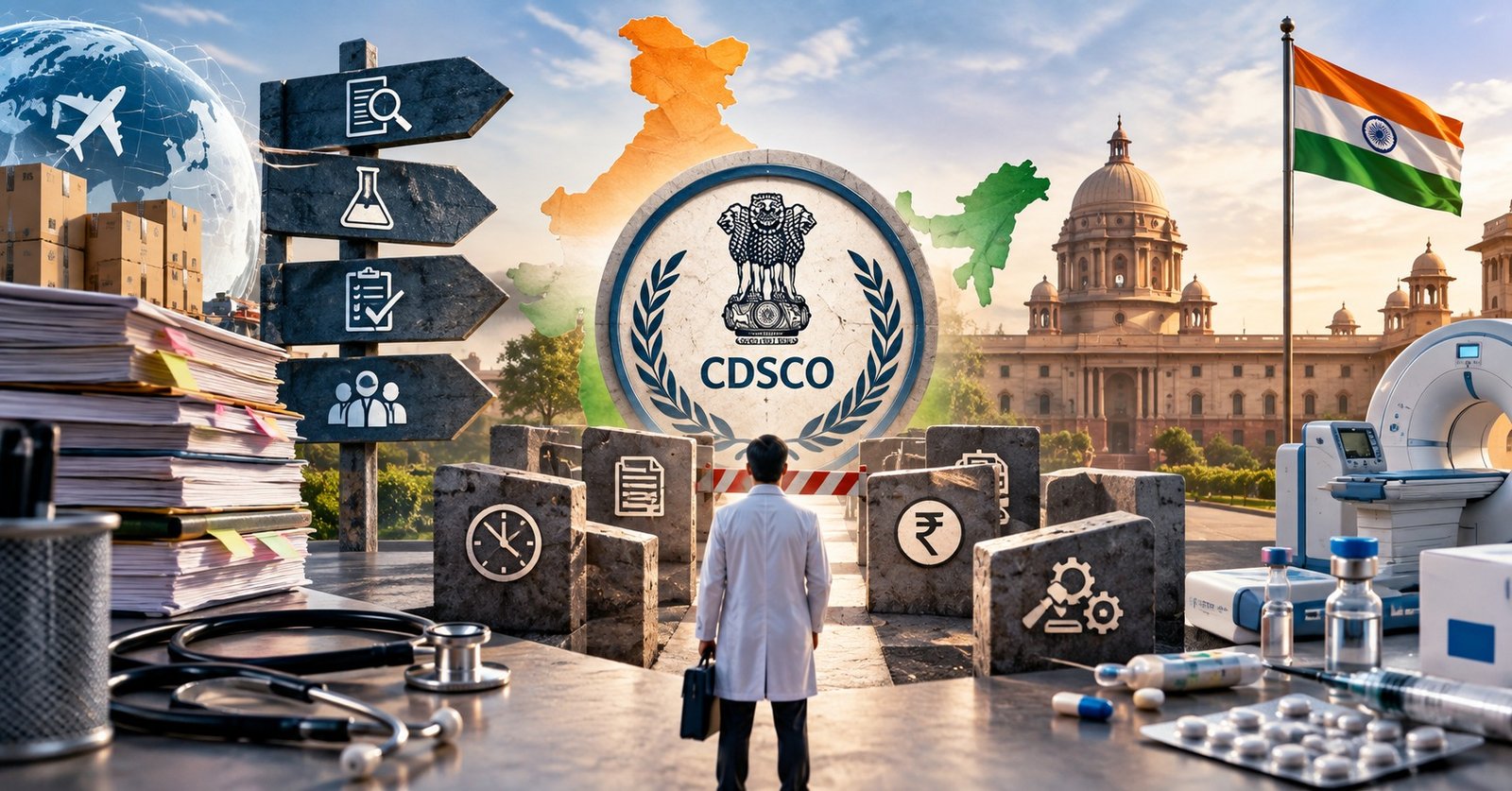

To choose a medical device consultant in India, check whether they know your device class under the Medical Devices Rules, 2017, have handled similar CDSCO filings, explain costs and timelines honestly, and stay involved after submission. A consultant guides and prepares your application. CDSCO, not the consultant, decides whether a licence is granted.
• Your device class and route (manufacture or import) decide the pathway. There is no single process for all devices.
• No honest consultant can promise approval or a fixed date.
• Ask for scope, deliverables, fees and responsibilities in writing.
• Look for support after filing: query replies, retention fee, changes and vigilance.
What does a medical device consultant in India do?
In practice, a good consultant may help with:
- Checking your device’s intended use and risk class
- Choosing the right route: manufacturing licence, import licence, or another permission
- Preparing the technical file, device master file, labels and Instructions for Use
- Setting up or reviewing your quality management system (QMS)
- Filing on the online SUGAM portal and replying to CDSCO queries
- Post-approval work such as retention fee reminders, change notifications, and adverse event and vigilance processes
A consultant does not grant approval, issue a licence, or influence the decision. Any firm that suggests otherwise is a warning sign.
Consultant, testing lab, notified body, regulator: who does what?
| Role | What it does | Can it grant a licence? |
|---|---|---|
| Medical device consultant / regulatory affairs consultant | Advises, plans strategy, prepares and files documents, coordinates | No |
| Certification consultant | Helps you prepare for standards such as ISO 13485; may not cover CDSCO filings | No |
| Testing laboratory | Tests devices against standards and issues test reports | No |
| Notified body (under MDR 2017) | Audits manufacturing sites of certain low-risk devices for QMS conformity, when accredited and applicable | No, it audits |
| CDSCO / State Licensing Authority | Reviews applications and grants licences under MDR 2017 | Yes |
When should you hire a regulatory consultant?
Consider help if you are launching a first product in India, are a foreign company that needs an Indian authorised agent, are unsure of your device class, are moving from Class A or B to higher-risk products, have received repeated CDSCO queries, or lack an in-house regulatory team. Larger firms with strong internal teams may only need help for specific tasks.
What CDSCO and MDR 2017 knowledge should a consultant have?
Your consultant should explain these basics clearly, and then tell you how they apply to your product.
- Risk classes: Devices are grouped into Class A, B, C and D by risk. Higher class usually means more documents and closer review.
- Manufacture: Class A and B licences are generally handled by the State Licensing Authority (Form MD-3 application, MD-5 licence). Class C and D go to the Central Licensing Authority (MD-7 application, MD-9 licence).
- Import: Import applications go to the Central Licensing Authority on Form MD-14, with the licence in Form MD-15, normally through an authorised Indian agent.
- Portal: Applications are filed online on the SUGAM portal.
- After approval: Licences do not expire under MDR 2017 as long as the retention fee is paid every five years. Other duties include labelling, UDI requirements, complaint handling and adverse event reporting.
- Honesty in filings: The Rules allow debarment for misleading or false documents. Your consultant must never “adjust” facts.
Read Also: CDSCO Compliance Challenges in India
What should you check before choosing a medical device consultant?
1. Regulatory experience that matches your product
Ask which classes, product types and routes they have handled, such as import of Class B devices or manufacturing of Class C devices. Experience with implants, IVDs or software differs from experience with simple instruments.2. Real understanding of CDSCO requirements
They should explain why your device falls in a class, which form applies, and what may trigger queries. Vague answers like “we handle everything” are not enough.3. Documentation capability
Ask for a document list for your device. It should cover items such as device description, intended use, risk management, labelling, test reports, QMS evidence and, where needed, clinical evidence.4. Submission and query handling
Who files on SUGAM? Who answers queries, and how fast? Do you keep access to your own submission records?5. Licensing and post-approval knowledge
Can they support retention fees, amendments, new products under an existing licence, and vigilance?6. Communication and ownership
You should have a named contact, a written plan, and regular status updates. Technical points should be explained in plain language.7. Transparency on cost and time
See the next section.| Factor | Positive sign | Concern |
|---|---|---|
| Classification | Explains class and reasoning, suggests confirming with CDSCO where unclear | Names a class without asking about intended use |
| Scope | Written list of deliverables and exclusions | “All-inclusive” with no detail |
| Timelines | Gives ranges and lists what can cause delay | Fixed date or guaranteed approval |
| Fees | Separates consultant fee, government fees, testing and audit costs | One unclear lump sum |
| Team | Tells you who will actually work on your file | Only a sales contact |
| Ethics | Refuses to change class or facts to save fees | Suggests shortcuts or “special contacts” |
| Support | Covers queries and post-approval tasks | Disappears after filing |
How should you evaluate consultant fees and timelines?
Ask for a quote that separates: consultant service fees, government fees, testing or audit costs, translation or notarisation, and post-approval support. Ask what happens if CDSCO raises many queries, and whether extra work is charged. Treat timelines as estimates. Your own team’s speed in supplying documents matters as much as the consultant’s.
Questions to ask before hiringQuestions to ask before hiring
- Which class and route is my device, and why?
- Which similar products have you worked on (without breaking client confidentiality)?
- What documents will you need from us, and by when?
- Who will prepare, review and file the application?
- How do you handle CDSCO queries and deadlines?
- What does your fee include and exclude?
- What can delay this project?
- Will we get copies of all submissions and reports?
- What support do you give after the licence is granted?
- What is your process if the application is delayed or queried heavily?
Common red flags
- Guaranteed approval, “100% success” or a fixed approval date
- Claims of special access to officials
- Suggesting a lower device class to reduce fees
- No written scope or contract
- Unverifiable claims of client numbers or approval rates
- Refusing to share who will do the work
- Pressure to pay everything upfront with no milestones
- Unable to explain the difference between a consultant, a notified body and CDSCO
Where TRACC Global fits
TRACC Global Research and Consulting Pvt. Ltd. is a medical device consultancy with its listed office in Gurugram, Haryana. According to its website, it supports the medical device lifecycle from regulatory strategy and QMS implementation to risk management and post-market surveillance and vigilance.
Its listed regulatory services include impact assessment, technical file and dossier preparation, MDR 2017 compliance, submissions to local authorities and global device registration. It also describes CDSCO import licence support (MD-14 and MD-15), authorised Indian agent services, query management and post-approval compliance support, plus turnkey factory setup services. You can read more on its About page, services page and CDSCO import licence page.
Apply the same checklist to TRACC Global that you apply to anyone else: ask for a written scope, your device class and route, a cost breakdown and realistic timeline ranges. The site’s blog also has related reading, such as its CDSCO licensing consultants guide. As with any vendor-published comparison, read it as one source among several.
Final checklist before you choose
How TraccGlobal Helps with CDSCO Compliance
TraccGlobal is a Gurugram-based regulatory consultancy that works with manufacturers, importers, and global companies on CDSCO compliance in India. Its regulatory services cover medical device registration under Class A to D, CDSCO import licensing, CDSCO manufacturing licensing, IVD kit registration, and SUGAM portal submissions, including preparation of Form MD-14/MD-15 documentation and management of regulatory queries.
Beyond registration, TraccGlobal supports the quality and documentation side of compliance: building and implementing a quality management system aligned with ISO 13485 and MDR requirements, preparing design and development documentation, and compiling the Design History File (DHF) that CDSCO reviewers expect to see in a technical file.
This combination — regulatory strategy, classification support, documentation preparation, and query management — is what a CDSCO consultant is meant to provide. As with any consultant, TraccGlobal prepares and manages the application; the approval decision itself always rests with CDSCO.
Frequently Asked Questions
Is a medical device consultant mandatory in India?
Can a consultant guarantee CDSCO approval?
How much does a CDSCO consultant charge?
How long does medical device licensing take in India?
What is the difference between a regulatory consultant and a notified body?
Do imported devices need a separate licence?
Company credentials
ISO 9001, ISO 27001 & ISO 45001 certified consultancy
Contact
info@traccglobal.com