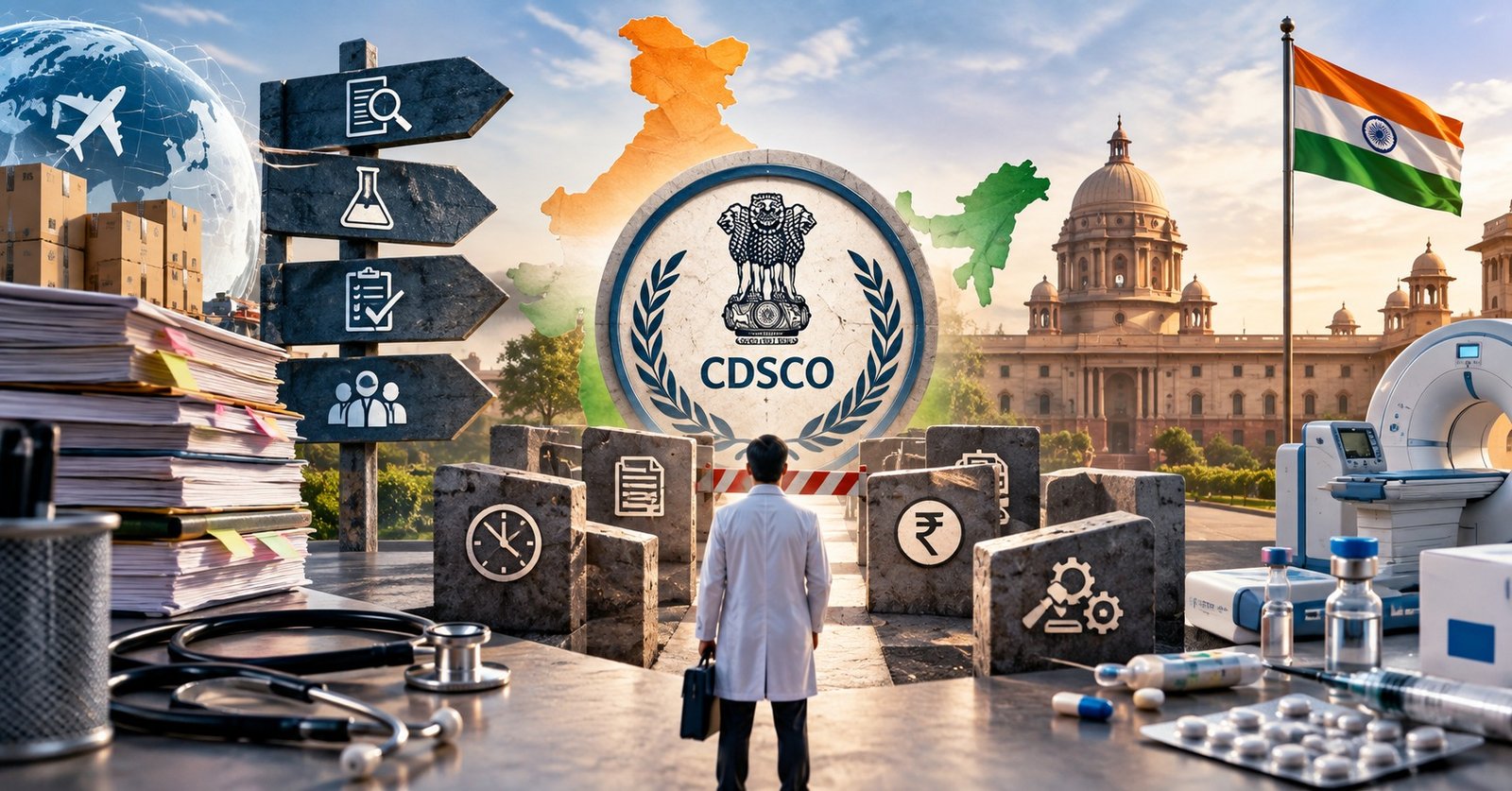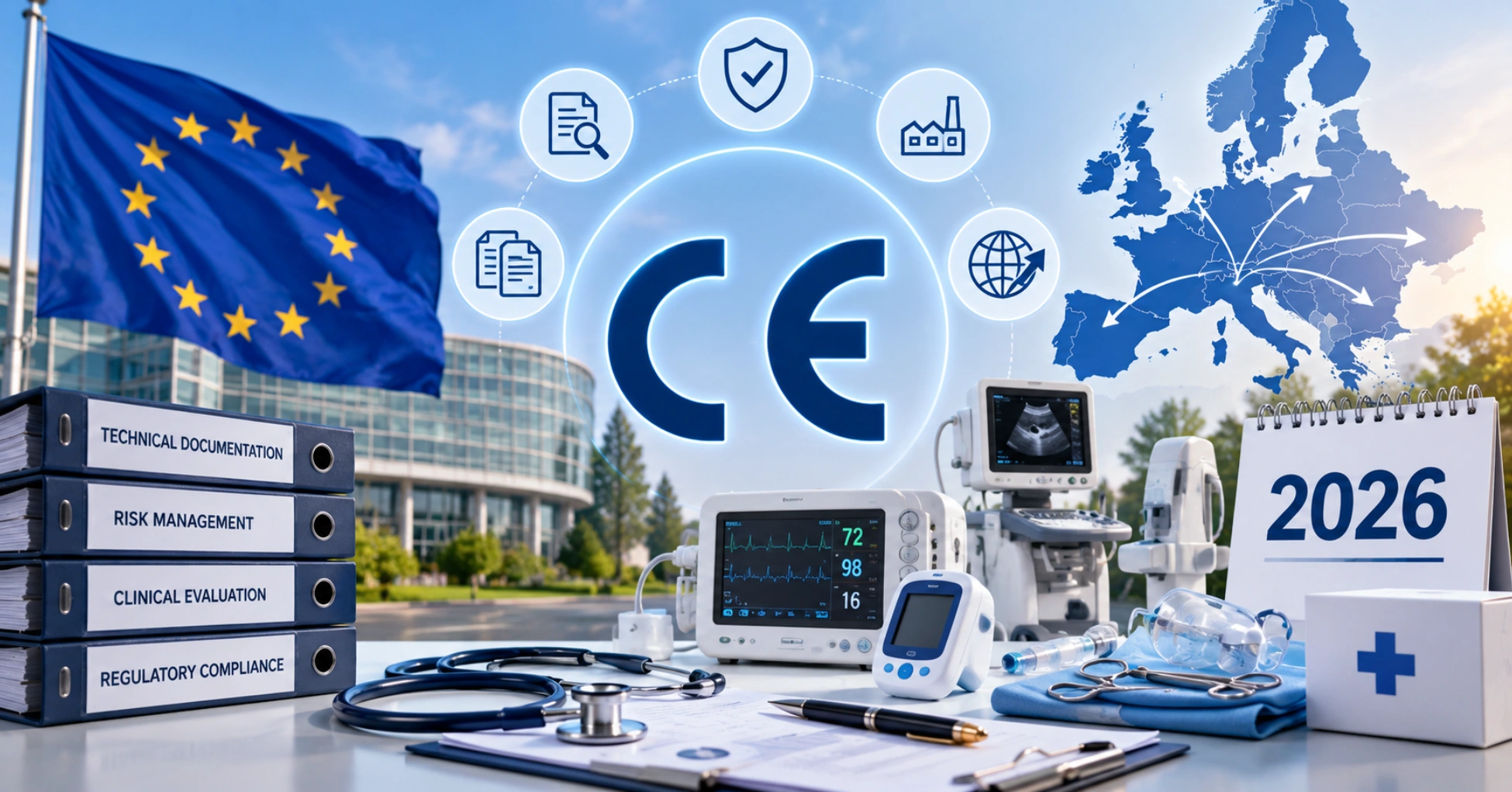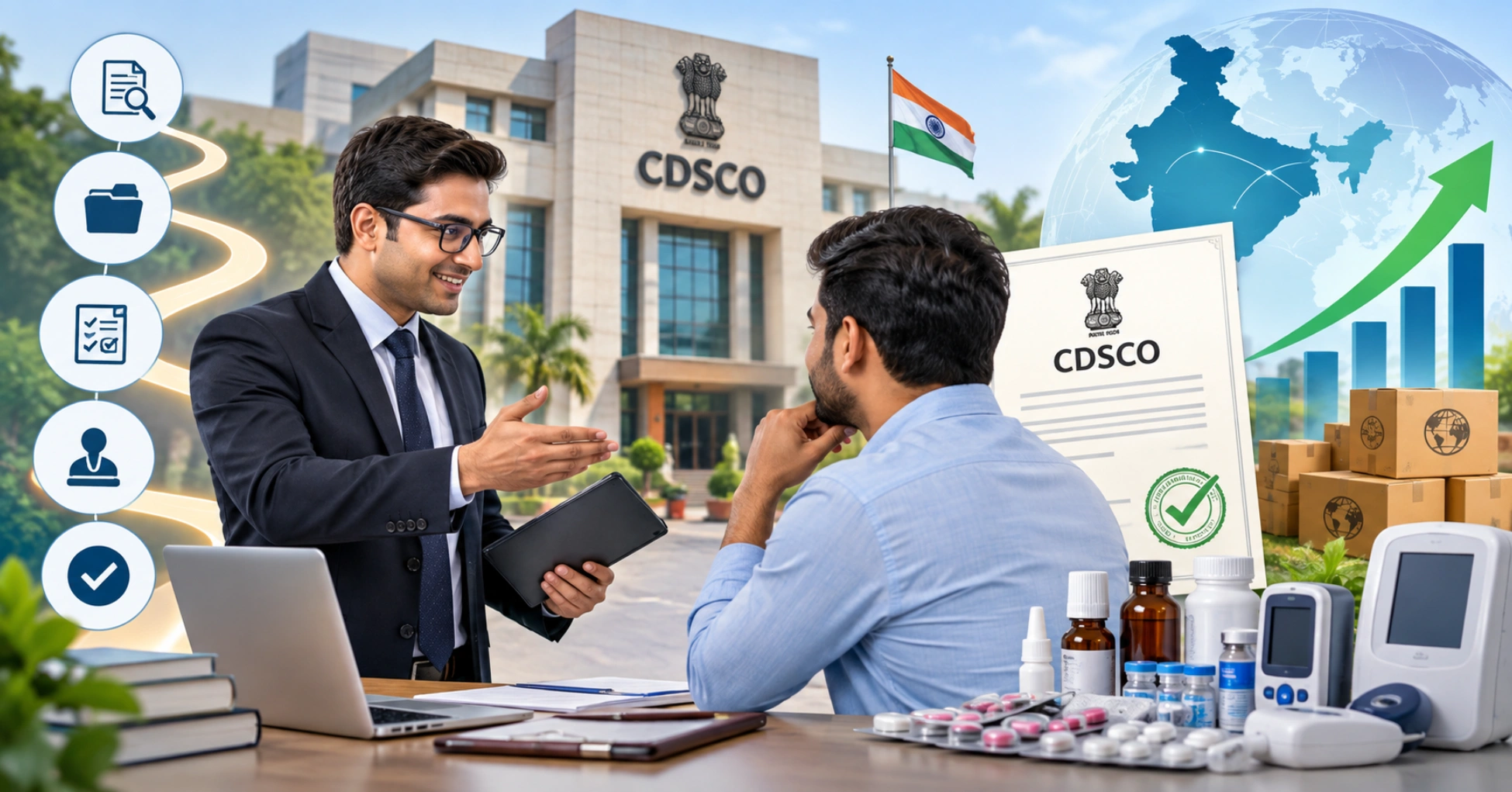
Businesses trust a CDSCO registration partner because it combines regulatory expertise, accurate documentation, and transparent communication to help pharmaceutical and medical device companies navigate India’s Central Drugs Standard Control Organisation requirements efficiently, reducing delays, avoiding rejections, and supporting long-term compliance under the Medical Device Rules 2017.
What Is a CDSCO Registration Partner?
A CDSCO registration partner is a regulatory consulting firm that helps pharmaceutical companies, medical device manufacturers, and importers obtain the licenses, approvals, and registrations required by the Central Drugs Standard Control Organisation (CDSCO) — India’s national regulatory authority for drugs and medical devices, operating under the Ministry of Health & Family Welfare (MoHFW).
The role of a CDSCO registration consultant typically spans regulatory strategy, product classification, technical documentation, liaison with the regulator through the SUGAM portal, and post-approval compliance support. Because CDSCO regulations are updated periodically and interpretation can vary by product category, businesses — particularly those entering the Indian market for the first time — often work with a consultant rather than managing the process entirely in-house.
Why Choosing the Right Regulatory Partner Matters
Selecting the right CDSCO registration consultant affects far more than paperwork speed. Regulatory submissions that are incomplete, misclassified, or inconsistent with CDSCO’s current requirements can lead to queries, resubmissions, or outright rejection — each of which extends market entry timelines and adds cost.
Consider a mid-sized diagnostics company preparing to import a Class C in-vitro diagnostic device. Without a clear understanding of device classification under the Medical Device Rules 2017, the company might initially file under the wrong risk class, triggering avoidable queries from the regulator and months of delay before the correct documentation is resubmitted.
This is why businesses increasingly evaluate CDSCO registration services India providers not just on cost, but on regulatory depth, documentation rigor, and how clearly the process is explained to them. A dependable CDSCO regulatory services partner reduces uncertainty at each stage — from classification through post-market compliance.
Expert Insight
Regulatory consultants often observe that the majority of avoidable delays in CDSCO filings stem not from the complexity of the regulation itself, but from documentation gaps — missing test reports, inconsistent device master files, or free sale certificates that don’t match the applicant’s other submissions.
7 Reasons Businesses Trust TraccGlobal for CDSCO Registration
TraccGlobal works with pharmaceutical and medical device businesses seeking a structured CDSCO registration partner for India market entry. The following seven factors outline what businesses generally look for — and evaluate — when engaging a regulatory consulting firm for CDSCO work.
| # | Reason | Core Benefit |
|---|---|---|
| 1 | Regulatory Expertise | Accurate interpretation of Medical Device Rules 2017 and drug regulations |
| 2 | End-to-End Documentation Support | Fewer queries and resubmissions through complete filings |
| 3 | Transparent Compliance Process | Clear visibility into timelines, status, and next steps |
| 4 | Experienced Regulatory Professionals | Informed handling of SUGAM portal filings and CDSCO queries |
| 5 | Industry-Specific Knowledge | Guidance tailored to device class, drug category, or diagnostic type |
| 6 | Faster Coordination & Regulatory Guidance | Streamlined communication between applicant and regulator |
| 7 | Long-Term Compliance Support | Continued support after initial approval, including renewals |
Regulatory Expertise
Why it matters: CDSCO regulation spans multiple frameworks depending on the product — drugs, medical devices, cosmetics, and diagnostics are each governed by distinct rules, and medical devices alone are classified into Class A, B, C, and D based on risk. Getting classification and applicable requirements right at the outset determines the entire trajectory of an application.
How it benefits businesses: A regulatory partner with working knowledge of the Medical Device Rules 2017, Drugs and Cosmetics Act, and associated CDSCO guidance documents can correctly map a product to its regulatory pathway before submission begins, rather than discovering a misclassification after a query is raised.
Practical example: A Class B wound-care device and a Class C implantable device follow different documentation depths — the latter typically requires more extensive clinical evidence and a more detailed Device Master File. Applying the wrong depth of documentation either slows the process down.
Common challenge solved: Businesses new to the Indian market often default to assumptions based on regulatory frameworks from other regions (such as the EU's CE marking or the US FDA process), which do not map directly onto CDSCO requirements.
Confirm device or drug classification under Indian rules specifically, rather than assuming equivalence with a CE or US FDA classification already held for the same product.
Regulatory expertise reduces the risk of early-stage classification errors that cascade into later delays.
End-to-End Documentation Support
Why it matters: CDSCO applications typically require a substantial documentation package — including the Device Master File (DMF), Plant Master File (PMF), free sale certificates, test reports, labelling, and quality management system evidence such as ISO 13485 certification. Missing or inconsistent documents are among the most common causes of processing delays.
How it benefits businesses: A partner that manages documentation end-to-end — compiling, cross-checking, and formatting submissions for the SUGAM portal — reduces the chance of a query being raised purely on administrative grounds rather than substantive regulatory concerns.
Practical example: An applicant’s free sale certificate, ISO 13485 certificate, and technical documentation must be internally consistent — the same product name, manufacturing site, and specifications should appear across every document. Discrepancies, even minor ones, frequently trigger clarification requests.
Expert Insight: Reviewers often flag document version mismatches — for instance, an outdated Plant Master File submitted alongside a current Device Master File — as a preventable cause of delay.
Thorough, cross-verified documentation prevents the administrative back-and-forth that extends approval timelines.
Transparent Compliance Process
Why it matters: CDSCO registration can take anywhere from a few weeks to several months depending on device class or drug category, and businesses need visibility into where their application stands to plan market entry, manufacturing, and distribution timelines.
How it benefits businesses: A structured, transparent process — clear stages, defined checkpoints, and honest timeline estimates rather than inflated promises — allows a business to plan around realistic milestones instead of guesswork.
Common challenge solved: Vague or overly optimistic timeline commitments from a consultant can leave a business unprepared when a query extends the process. Transparency about likely review cycles, even when they are longer than hoped, supports better internal planning.
Ask a prospective regulatory partner to walk through the specific stages your application will pass through, not just a single end-to-end estimate.
Transparency about process and timelines is as valuable to businesses as the registration outcome itself.
Experienced Regulatory Professionals
Why it matters: Filing through the SUGAM portal, responding to CDSCO queries, and interpreting evolving guidance requires familiarity with both the technology platform and the regulator’s expectations — skills built through direct, repeated experience with the system.
How it benefits businesses: Professionals who have handled multiple filings recognize patterns in how queries are typically framed and can help applicants respond precisely, rather than generically, which shortens query-resolution cycles.
A well-structured response to a CDSCO query — addressing the specific regulatory concern directly, with supporting evidence — is generally resolved faster than a response that reiterates the original submission.
Hands-on experience with CDSCO’s systems and query patterns translates into more efficient issue resolution.
Industry-Specific Knowledge
Why it matters: Requirements differ meaningfully between an implantable medical device, an in-vitro diagnostic kit, and a finished pharmaceutical formulation. A one-size-fits-all approach to regulatory strategy overlooks category-specific nuances.
How it benefits businesses: Guidance tailored to a product’s specific category — including its clinical evaluation requirements, applicable Indian Standards, and labelling rules — reduces the likelihood of submitting a generic package that doesn’t fully address CDSCO’s category-specific expectations.
Industry-specific knowledge ensures the regulatory strategy matches the actual risk profile and category of the product.
Faster Coordination & Regulatory Guidance
Why it matters: Many applicants, especially overseas manufacturers, do not have a direct line of communication with CDSCO and must work through an Authorized Indian Agent. Coordination between the manufacturer, the Indian Agent, and the regulator needs to be efficient to avoid communication gaps.
How it benefits businesses: A regulatory partner that actively coordinates between these parties — relaying queries, clarifications, and status updates promptly — prevents delays caused purely by miscommunication rather than substantive regulatory issues.
Establish a single point of contact responsible for coordinating between the manufacturer, Authorized Indian Agent, and CDSCO to avoid duplicated or conflicting communication.
Efficient coordination between all parties involved shortens the practical, not just procedural, timeline to approval.
Long-Term Compliance Support
Why it matters: CDSCO registration is not a one-time event. Licenses require renewal, product changes may need to be reported, and post-market compliance obligations — such as adverse event reporting for medical devices — continue for as long as the product remains on the Indian market.
How it benefits businesses: A partner that supports the full lifecycle of compliance, not just the initial approval, helps businesses avoid lapses that could jeopardize their license to continue selling in India.
Businesses that treat CDSCO approval as a finish line, rather than the start of an ongoing compliance relationship, are more likely to miss renewal deadlines or fail to report manufacturing site changes.
Long-term compliance support protects the value of the initial registration investment over the product's full market life.
Industries Served
Businesses seeking a CDSCO registration partner typically fall into a few broad categories, each with distinct regulatory pathways:
- Medical device manufacturers and importers — Class A through D devices under the Medical Device Rules 2017
- In-vitro diagnostic (IVD) companies — diagnostic kits and instruments requiring device-specific classification
- Pharmaceutical manufacturers and importers — drug licensing, manufacturing licenses, and import licenses
- Cosmetics and healthcare product companies — registration where applicable under relevant CDSCO frameworks
- Global manufacturers entering India — requiring an Authorized Indian Agent and full local regulatory representation
Medical Device & Drug Registration Services
A comprehensive CDSCO licensing services engagement generally covers the following areas, whether the applicant is registering a medical device or a pharmaceutical product.
| Service Area | What It Covers |
|---|---|
| Regulatory Strategy | Classification, pathway selection, and applicable rule mapping |
| Documentation Preparation | Device Master File, Plant Master File, technical files, labelling review |
| SUGAM Portal Filing | Application submission and status tracking through CDSCO’s online system |
| Import License Support | Guidance through Form MD-14/MD-15 processes for device imports |
| Manufacturing License Support | Guidance through Form MD-3/MD-9 processes for domestic manufacturing |
| Query Response Management | Drafting and submitting responses to CDSCO clarification requests |
| Post-Approval Compliance | Renewal tracking, change notifications, and ongoing regulatory monitoring |
| Stage | Typical Activity |
|---|---|
| 1. Classification & Strategy | Determine device class or drug category and applicable rules |
| 2. Documentation Compilation | Prepare DMF, PMF, test reports, and supporting certificates |
| 3. Application Filing | Submit via SUGAM portal with required fees |
| 4. Regulatory Review | CDSCO evaluates submission; may raise queries |
| 5. Query Resolution | Applicant responds with clarifications or additional evidence |
| 6. Approval / License Issuance | Registration certificate or license granted |
| 7. Post-Approval Compliance | Renewals, change reporting, and surveillance obligations begin |
| Factor | Medical Device | Drug |
|---|---|---|
| Governing Framework | Medical Device Rules, 2017 | Drugs and Cosmetics Act & Rules |
| Classification Basis | Risk-based (Class A–D) | Therapeutic category / new vs. existing drug |
| Key Documentation | DMF, PMF, ISO 13485, clinical evaluation | Manufacturing data, stability studies, labelling |
| Filing Platform | SUGAM Portal | SUGAM Portal (drug modules) |
| Import Route | Import License (Form MD-14/MD-15) | Import License under Drugs Rules |
Common CDSCO Registration Challenges
Businesses pursuing CDSCO approval process compliance frequently encounter a recurring set of obstacles. Understanding these in advance allows a CDSCO registration consultant to help applicants prepare more thoroughly before filing.
| Factor | Practical Solution |
|---|---|
| Incorrect device or drug classification | Confirm classification against current Indian rules before filing, not by analogy to other markets |
| Inconsistent documentation across files | Cross-verify product names, sites, and specifications across every submitted document |
| Missing or outdated ISO 13485 certification | Confirm QMS certification validity and scope before beginning the filing |
| Delayed responses to CDSCO queries | Assign a dedicated coordinator to monitor and respond to queries promptly |
| Unclear communication with an overseas manufacturer | Use an Authorized Indian Agent with a defined communication protocol |
| Overlooking post-approval obligations | Maintain a compliance calendar covering renewals and change notifications |
| Aspect | Import License | Manufacturing License |
|---|---|---|
| Applies To | Products manufactured outside India | Products manufactured outside India |
| Applicant | Authorized Indian Agent on behalf of overseas manufacturer | Domestic manufacturing entity |
| Key Requirement | Free sale certificate from country of origin | Site master file and manufacturing infrastructure evidence |
| Class | Risk Level | Example Category |
|---|---|---|
| Class A | Low risk | Products manufactured outside India |
| Class B | Low-moderate risk | Syringes, wound dressings |
| Class C | Moderate-high risk | Diagnostic imaging equipment |
| Class D | High risk | Implantable and life-supporting devices |
| Criterion | Why It Matters |
|---|---|
| Clear explanation of applicable rules | Signals genuine regulatory understanding rather than generic process handling |
| Transparent, realistic timelines | Supports accurate business planning |
| Defined documentation review process | Reduces risk of preventable queries |
| Post-approval support offering | Ensures compliance continues beyond initial registration |
| Responsiveness to queries | Reflects how the partner will handle issues once your application is filed |
| Document | Purpose |
|---|---|
| Device Master File (DMF) | Technical description of the device and its design |
| Plant Master File (PMF) | Details of the manufacturing site and quality systems |
| Free Sale Certificate | Evidence the product is legally sold in its country of origin |
| ISO 13485 Certificate | Confirms an active quality management system |
| Clinical Evaluation Report | Supports safety and performance claims, where required |
| Phase | Focus |
|---|---|
| Pre-Filing | Classification, documentation gap analysis, Indian Agent appointment |
| Filing | SUGAM submission, fee payment, initial acknowledgment |
| Review | Query monitoring and structured response management |
| Post-Approval | Renewal tracking, change management, surveillance reportingm |
Exploring CDSCO Registration for Your Product?
Learn more about TraccGlobal’s regulatory consulting approach for pharmaceutical and medical device businesses.
Frequently Asked Questions
What does a CDSCO registration partner do?
A CDSCO registration partner guides businesses through classification, documentation, and filing for drug or medical device approval in India, coordinating with the Central Drugs Standard Control Organisation and supporting compliance from application through post-approval obligations.
Why should businesses hire a CDSCO registration consultant?
A CDSCO registration consultant reduces the risk of misclassification, incomplete documentation, and delayed queries by applying working knowledge of the Medical Device Rules 2017 and CDSCO’s filing systems, helping businesses reach approval more efficiently than navigating the process independently.
How long does the CDSCO approval process take?
Timelines vary by device class or drug category and by how complete the initial application is. Lower-risk devices generally move faster, while higher-risk devices and drugs with clinical evidence requirements typically take longer, especially if queries are raised during review.
Who needs CDSCO registration?
Any business manufacturing, importing, or selling regulated drugs, medical devices, or in-vitro diagnostics in India generally needs CDSCO registration or licensing, including overseas manufacturers who must work through an Authorized Indian Agent to file on their behalf.
What documents are required for CDSCO registration?
Core documents typically include a Device Master File, Plant Master File, free sale certificate, ISO 13485 certification for devices, and supporting technical or clinical evidence, though exact requirements depend on the product’s classification and category.
Can TraccGlobal assist with CDSCO import licenses?
TraccGlobal supports businesses through the import licensing process for medical devices and pharmaceuticals, including documentation preparation and coordination with the Authorized Indian Agent required for overseas manufacturers filing with CDSCO.
What industries require CDSCO regulatory services?
Medical device manufacturers, in-vitro diagnostic companies, pharmaceutical manufacturers and importers, and healthcare product companies generally require CDSCO regulatory services to legally register and sell their products within the Indian market.
What is the Medical Device Rules 2017?
The Medical Device Rules 2017 is the primary regulatory framework governing the classification, registration, manufacturing, and import of medical devices in India, establishing the risk-based Class A through D system used by CDSCO.
Is ISO 13485 certification required for CDSCO device registration?
ISO 13485 certification, which demonstrates an active quality management system, is generally required as supporting documentation for medical device registration under CDSCO, particularly for higher-risk device classes.
What happens after CDSCO approval is granted?
After approval, businesses must maintain compliance through license renewals, reporting manufacturing or product changes, and meeting post-market surveillance obligations — ongoing responsibilities that a long-term regulatory partner typically continues to support.
Why TraccGlobal Is a Reliable Long-Term Regulatory Partner
Navigating CDSCO registration involves more than submitting forms — it requires accurate classification, complete documentation, clear communication, and sustained attention to compliance long after initial approval. Businesses evaluating a CDSCO registration partner generally look for exactly these qualities: regulatory expertise, transparency, and a willingness to stay engaged through the full product lifecycle rather than treating approval as a single transaction.
TraccGlobal positions its CDSCO regulatory services around this structured approach — helping pharmaceutical and medical device businesses move through classification, documentation, filing, and post-approval compliance with clarity at each stage. For businesses seeking a trusted CDSCO registration partner to support India market entry, understanding this end-to-end process is the first step toward a smoother regulatory journey.